Large scale gene transfer between single-celled and multicellular organisms reported
Licensed archive · Attributed source reporting
411 Brief
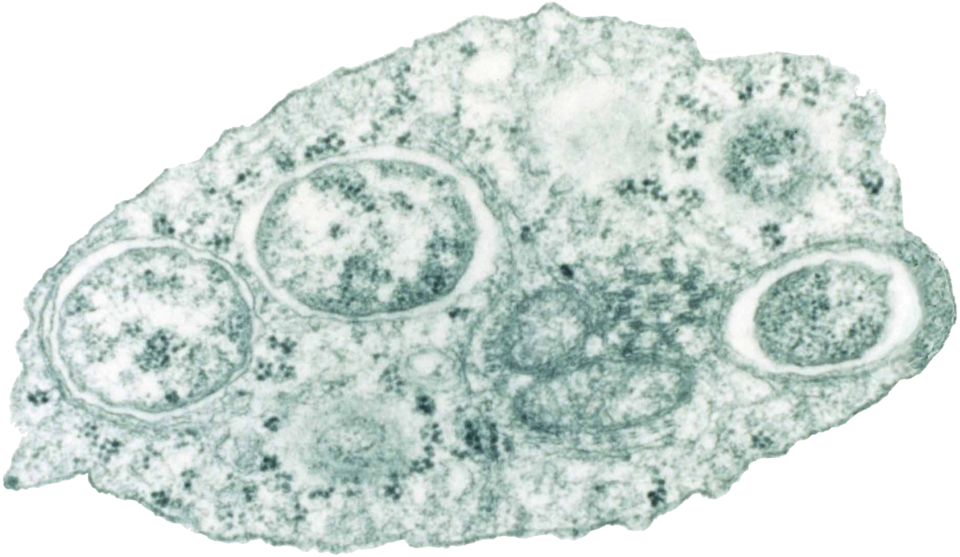
Wolbachia has on some occasions inserted almost its entire genome into species that it infects, reported scientists at the J. Craig Venter Institute and the University of Rochester. This is the first example of large-scale horizontal gene transfer between single-celled and multicellular organisms. Although horizontal gene transmission is common among single-celled organisms, it is rare among multicellular organisms, and large scale transfer like that of an entire genome had previously not been suspected. The scientists found that in addition
Wolbachia has on some occasions inserted almost its entire genome into species that it infects, reported scientists at the J. Craig Venter Institute and the University of Rochester. This is the first example of large-scale horizontal gene transfer between single-celled and multicellular organisms. Although horizontal gene transmission is common among single-celled organisms, it is rare among multicellular organisms, and large scale transfer like that of an entire genome had previously not been suspected.
The scientists found that in addition to Wolbachia engaging in almost complete genome transfer into Drosophila ananassae, it also had made significant transfer in 3 other insects species and 4 species of nematodes. The researchers found candidate species by scanning genetic databases for sequences found in Wolbachia. The scientists also found that these added sections were conserved by reproduction; that is the added sections stayed in the genomes after multiple generations. Moreover, there is evidence that suggests that the segments of Wolbachia's genome increased the reproductive fitness of the insect species.
The transfers likely occurred during attempts at DNA repair in which the repair mechanisms incorporated Wolbachia DNA (available since the cells were infected with Wolbachia) into the genomes. These results could have major implications for understanding of evolution. The research also has implications for various forms of sequencing research, since when sequencing species, bacteria sequences are frequently ignored as they are generally assumed to be contaminants rather than good data.
Wolbachia, a genus of bacteria that normally infects arthropods, especially insects, is already known for its odd behavior that can affect species in strange ways. For example, Wolbachia has been shown to be correlated with fast evolution among species it infects and is suspected for being responsible for a variety of speciation events as a side effect of Wolbachia creating reproductive barriers. Wolbachia by some estimates infects more than half of all arthropods and is already thought to play a major role in the evolution and speciation of many invertebrates.
Since Wolbachia can generally only reproduce through females, it has adopted a number of strategies that treat males and females of species differently that can result in reproductive barriers. These strategies include killing of males, forced parthenogenesis, and preventing infected males from reproducing with uninfected females.
Sources & reporting note
Licensed archive reporting by Wikinews contributors. Text: CC BY 2.5 (https://creativecommons.org/licenses/by/2.5/). Original source date retained. 411 has not independently verified this archive report.
Read the source: Wikinews ↗Source published 4 Sept 2007, 05:30 am IST