China enacts historic "anti-secession" law
Licensed archive · Attributed source reporting
411 Brief
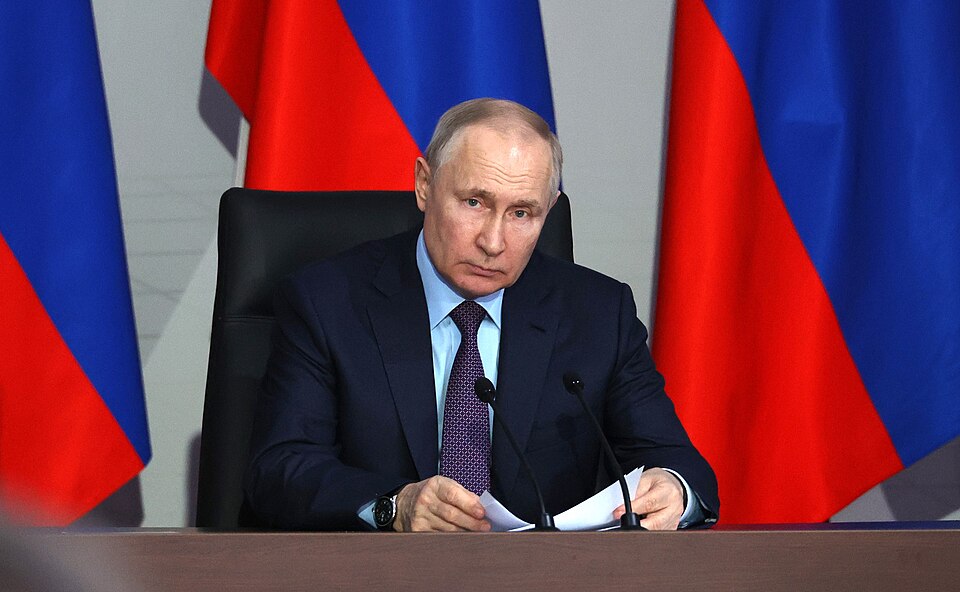
By a vote of 2896-0 (with two abstentions), the National People's Congress of the People's Republic of China has passed an "anti-secession" law designed to thwart Taiwan independence. Chinese President Hu Jintao quickly signed a presidential order to bring the law into effect. The law provides a legal basis for China to use force, or "nonpeaceful means" as the Chinese government has phrased it, against Taiwan, should reunification efforts fail. Chinese premier Wen Jiabao stressed that the legislation is aimed at achieving peace in the Taiwan
By a vote of 2896-0 (with two abstentions), the National People's Congress of the People's Republic of China has passed an "anti-secession" law designed to thwart Taiwan independence. Chinese President Hu Jintao quickly signed a presidential order to bring the law into effect.
The law provides a legal basis for China to use force, or "nonpeaceful means" as the Chinese government has phrased it, against Taiwan, should reunification efforts fail.
Chinese premier Wen Jiabao stressed that the legislation is aimed at achieving peace in the Taiwan Straits.
Speaking at a press conference following the law's passage, Wen stated, "This law is meant to strengthen and promote cross-straits relations. This law is for peaceful reunification. It is not targeted against the people of Taiwan, nor is it a war bill."
"This law is to contain and oppose Taiwan separatist forces. Only by containing and opposing Taiwan separatist forces can the Taiwan Straits have peace," he added.
The vote was broadcast live on state-controlled television and radio. The Chinese Xinhua news agency has taken the unusual step of setting up a special section on its Internet site to explain the law and its ramifications from the Chinese perspective.
Chinese officials describe PRC policy as being committed to peace to the maximum extent possible, while acknowledging limits to peaceful negotiation. A Xinhua headline from the days leading up to the law's passage declares, "China Pursues Peace, But Not at Any Price."
Wang Zhaoguo of the National People's Congress previously stated on March 8, "Using non-peaceful means to stop secession in defense of our sovereignty and territorial integrity would be our last resort, when all our efforts for a peaceful reunification prove futile." Added Wang, "No one is more desirous of achieving a peaceful reunification than we are."
Taiwanese politicians reacted with strongly-worded "anti-invasion" legislation, and vowed to call a one-million strong rally in opposition to the new law.
The timing of the legislation comes at a delicate moment for U.S. Secretary of State Condoleezza Rice, who is making her first trip to China in a few days.
"We do view the adoption of the anti-secession law as something that is unfortunate and not helpful to encouraging peace and stability in the Taiwan Strait," said White House spokesman Scott McClellan.
Sources & reporting note
Licensed archive reporting by Wikinews contributors. Text: Public domain (https://en.wikinews.org/wiki/Wikinews:Copyright). Original source date retained. 411 has not independently verified this archive report.
Read the source: Wikinews ↗Source published 15 Mar 2005, 05:30 am IST