Short-haired bumblebees reintroduced to UK
Licensed archive · Attributed source reporting
411 Brief
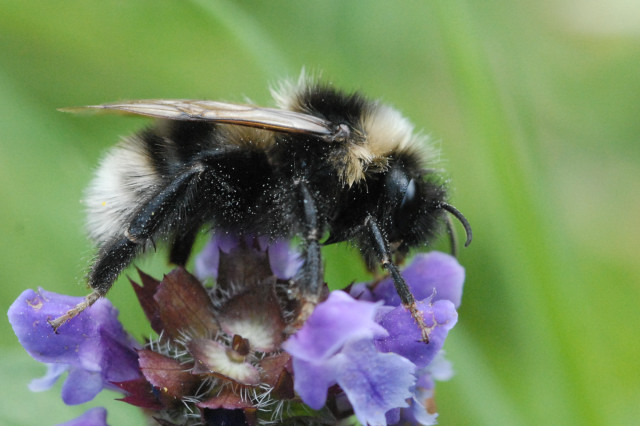
A small population of Bombus subterraneus, the short-haired bumblebee, was reintroduced to the UK yesterday. The bee was declared extinct in Britain in 2000. Around 100 queen bees were captured from Skåne, Sweden after the Nordic nation gave the go-ahead. After quarantine, around half of these were rejected to avoid introducing parasites alongside the bees. The rest have been released into a nature reserve in Dungeness, England. "We've screened for four different parasite species," explains biologist Dr Mark Brown of the University of London,
A small population of Bombus subterraneus, the short-haired bumblebee, was reintroduced to the UK yesterday. The bee was declared extinct in Britain in 2000.
Around 100 queen bees were captured from Skåne, Sweden after the Nordic nation gave the go-ahead. After quarantine, around half of these were rejected to avoid introducing parasites alongside the bees. The rest have been released into a nature reserve in Dungeness, England.
"We've screened for four different parasite species," explains biologist Dr Mark Brown of the University of London, where the bees spent two weeks at Royal Holloway. The parasites "can all damage bees in different ways."
Work has been ongoing at Dungeness for years, establishing flowers the bees are known to like in meadows at the site, which, although rural, lies at the heart of an industrial area. Habitat loss is blamed for the bees' extinction in the UK, with more intensive farming methods destroying meadows. South Sweden has less intensive farming, allowing the Swedish population to thrive. A normal survival rate of 20–30% is expected.
Organisations including the Bumblebee Conservation Trust, Natural England, and the Royal Society for the Protection of Birds (RSPB) are involved in funding the project, with the reserve itself belonging to the RSPB.
The bees were last seen in Dungeness in the 1980s. The same spot lost the shrill carder bee at around the same time, but shrill carder bees have recently been rediscovered there.
It is the second attempt to reintroduce short-haired bumblebees to Britain, after an effort in 2009 using bees removed from New Zealand. British bees were introduced to New Zealand to aid pollination before they were threatened. The bees died in the UK and tests established they had low genetic diversity. There are plans to add more bees to the Dungeness programme to increase genetic diversity there.
Sources & reporting note
Licensed archive reporting by Wikinews contributors. Text: CC BY 2.5 (https://creativecommons.org/licenses/by/2.5/). Original source date retained. 411 has not independently verified this archive report.
Read the source: Wikinews ↗Source published 29 May 2012, 05:30 am IST