Entomological Society of America renames invasive moth
Licensed archive · Attributed source reporting
411 Brief
On Wednesday, the Entomological Society of America renamed the caterpillar formerly known as "gypsy moth" to "spongy moth" in English as part of its Better Common Names Project. Its scientific name remains Lymantria dispar. The society announced they were removing the common name last July, but did not choose a new name until last week, when the Society voted unanimously for "spongy moth." Romani scholar Magda Matache of Harvard University's Roma Program reported: "Gypsy is considered a racial slur by many Romani people. It carries a very p
On Wednesday, the Entomological Society of America renamed the caterpillar formerly known as "gypsy moth" to "spongy moth" in English as part of its Better Common Names Project.
Its scientific name remains Lymantria dispar.
The society announced they were removing the common name last July, but did not choose a new name until last week, when the Society voted unanimously for "spongy moth."
Romani scholar Magda Matache of Harvard University's Roma Program reported: "Gypsy is considered a racial slur by many Romani people. It carries a very painful history, and it is offensive." The Romani, or Roma, have faced considerable prejudice in Europe and North America.
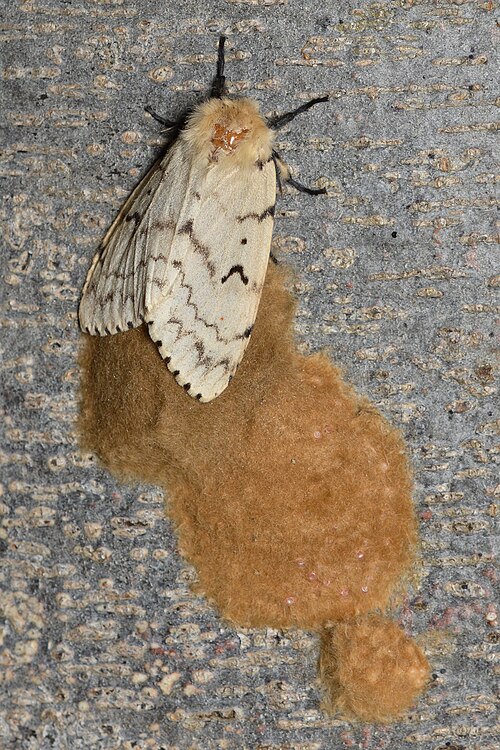
The 57 people from the Project assigned to this species took comments from the general public and examined more than 200 suggested names. "Spongy moth," from the French spongieuse, was proposed in January. The "spongy" refers to the sponge-like appearance of the egg masses that harbor the animal's eggs through winter.
It also matches the common names given to this animal in other languages: "sponge-spinner" in German and "sponge-knitter" in Turkish. According to CNN, the animal is most likely to spread to new areas during its egg stage, as they travel from being laid on firewood or vehicles.
The spongy moth is native to Europe, Asia, and northern Africa, but is a highly destructive invasive species in North America. It first reached the continent in 1869.
The caterpillars are brown in color and covered in spines and blue and red spots. They can eat the leaves off a tree until bare of foliage. Altogether, spongy moth caterpillars have defoliated 1 million acres of North American trees per year since 1980.
"They basically, like The Very Hungry Caterpillar, are just chewing their way through deciduous forests," Jessica Ware of the Entomological Society of America reports, citing a children's picture book. "'Spongy moth' is already beginning to appear in media stories and other online resources, which we're excited to see. But we know this name change won't happen overnight," she said.
"Particularly in books or print products, or regulations related to L. dispar, phasing in use of the new name may take some time. ESA will continue to provide supporting resources for organizations adopting this change."
The Entomological Society of America is the world's largest professional organization for insect scientists.
Sister links
Sources & reporting note
Licensed archive reporting by Wikinews contributors. Text: CC BY 2.5 (https://creativecommons.org/licenses/by/2.5/). Original source date retained. 411 has not independently verified this archive report.
Read the source: Wikinews ↗Source published 8 Mar 2022, 05:30 am IST