Czechs and Slovaks celebrate twenty years since Velvet Revolution
Licensed archive · Attributed source reporting
411 Brief
Czechs and Slovaks yesterday celebrated the twenty-year anniversary of the so-called "Velvet Revolution", which brought down the then Czechoslovakian Communist regime, with thousands re-enacting the demonstration that followed the fall of the Berlin Wall, and elections in Poland and Hungary. David Gaydecka, one of the organisers, was thirteen when he went with his father to participate in the demonstration. "I didn't really understand what was happening, but I could sense something in the air. I knew this was something important," he said. "T
Czechs and Slovaks yesterday celebrated the twenty-year anniversary of the so-called "Velvet Revolution", which brought down the then Czechoslovakian Communist regime, with thousands re-enacting the demonstration that followed the fall of the Berlin Wall, and elections in Poland and Hungary.
David Gaydecka, one of the organisers, was thirteen when he went with his father to participate in the demonstration. "I didn't really understand what was happening, but I could sense something in the air. I knew this was something important," he said. "The Wall had come down in Berlin, they were holding elections in Poland and Hungary. Everyone knew that it would come here too, but nobody knew how to do it. It was embarrassing for the Czechs; we were almost the last ones."
Former dissident and playwright Václav Havel, who went on to become President of Czechoslovakia (and first president of the Czech Republic) joined 5,000 students, past and present, who retraced the march. Originally officials had sanctioned the march, but groups splintered away in an attempt to reach Wenceslas Square. The Communist leaders ordered riot police to seal off streets, leading to beatings and two hundred people injured.
This was to prove the government's downfall with anger throughout the country motivating opposition and the old regime broke down shortly afterwards. "The atmosphere that day was terrible, like a war," Michael Kocáb, Czech Minister for Human Rights and Minorities, who played a major role in the transition from a totalitarian regime to democracy. "I was just a few yards away when I saw the police beating people. It was the first time that the police did not leave an escape route for us. By then we were used to clashes but somehow we felt that day that it would be an important moment that would lead to change and have an impact on the regime."
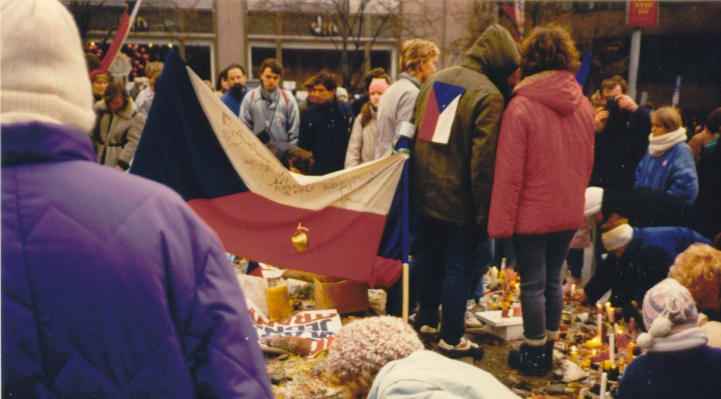
Havel, along with current Czech President Václav Klaus, Prime Minister Jan Fischer and hundreds of participants laid flowers and lit candles at a memorial in memory of the violent clashes. "The march set history into motion," said Havel.
Sources & reporting note
Licensed archive reporting by Wikinews contributors. Text: CC BY 2.5 (https://creativecommons.org/licenses/by/2.5/). Original source date retained. 411 has not independently verified this archive report.
Read the source: Wikinews ↗Source published 18 Nov 2009, 05:30 am IST