Japan blames design, maintenance for explosion on China Airlines jet
Licensed archive · Attributed source reporting
411 Brief
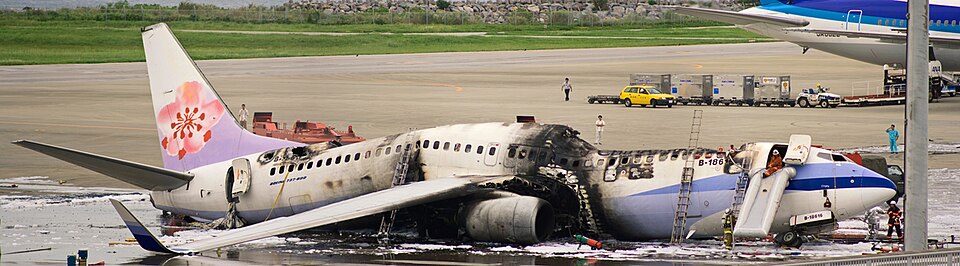
Japan's Transportation Safety Board has blamed a combination of poor design and a maintenance error for a fire and explosions that destroyed a passenger jet. The China Airlines Boeing 737-800 had landed at Naha Airport in 2007 and had just parked and shut its engines down when a fire broke out on the right hand engine, quickly moving to the wing and the tarmac beneath. Ground staff alerted the crew and an evacuation commenced. In just three minutes and 27 seconds all the 157 passengers had evacuated, but the flight crew remained. The first of
Japan's Transportation Safety Board has blamed a combination of poor design and a maintenance error for a fire and explosions that destroyed a passenger jet.
The China Airlines Boeing 737-800 had landed at Naha Airport in 2007 and had just parked and shut its engines down when a fire broke out on the right hand engine, quickly moving to the wing and the tarmac beneath. Ground staff alerted the crew and an evacuation commenced.
In just three minutes and 27 seconds all the 157 passengers had evacuated, but the flight crew remained. The first officer was midway through evacuating and the captain still in the cockpit when the first explosion occurred, blasting the first officer to the ground. The captain escaped immediately afterwards and no-one was injured.
It was approximately five minutes before the first airport fire engine began to spray foam on the fuselage, by which time two more explosions had occurred. The structure collapsed shortly afterwards while other fire crews arrived from both the airport and the city.
The final report has confirmed that during mandatory scheduled maintenance conducted per Boeing's recommendations about a month and a half prior to the jet's destruction, a washer had come off a bolt in the wing. As a result, the bolt had fallen off. When the jet arrived at Naha, it used its slats to assist the landing.
However, the bolt had worked its way into the track that one of these slats moved on, and as the slat was retracted after the landing the bolt became trapped between the slat and a fuel tank, which it punched through. Fuel then leaked out and dribbled onto the hot engine, starting the fire that then consumed the aircraft. The fire only started when the engine was shut down, as before then the fuel had been blown away by the force produced.
The report criticised the design of the bolt, as it "was unable to prevent the assembly from falling off if the washer is not installed." It further commented that neither Boeing nor China Airlines had considered the fact that the bolt's location was difficult to access when planning the maintenance to the aircraft. The fact that maintenance workers had not reported the difficulty of the work was also found to have contributed to the washer's absence going undetected. As part of the job, the nut on the end of the bolt was replaced, but the engineer couldn't see the bolt's head and didn't check the washer.
As a result of the accident the aviation authorities of Boeing's and China Airlines' home countries — the United States and Taiwan respectively — have been sent recommendations to review procedures to ensure the accident cannot be repeated.
Sources & reporting note
Licensed archive reporting by Wikinews contributors. Text: CC BY 2.5 (https://creativecommons.org/licenses/by/2.5/). Original source date retained. 411 has not independently verified this archive report.
Read the source: Wikinews ↗Source published 31 Aug 2009, 05:30 am IST