Bones of 'small-bodied humans' found in Micronesian cave
Licensed archive · Attributed source reporting
411 Brief
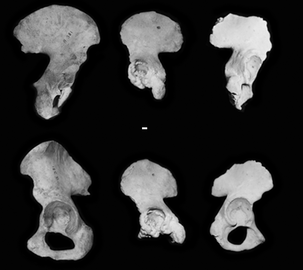
Another population of small humans has been reported, this time in caves in Micronesia. Lee Berger, Steven Churchill, Bonita De Klerk and Rhonda Quinn, a team of paleontologists and anthropologists from South Africa and the United States document a group of "small-bodied humans" found in the " in limestone caves in the rock islands of Palau, Micronesia." The report, in a recent edition of the open access journal, PLoS ONE (2008 3:3) argues that these small people may "represent a congenitally abnormal individual drawn from a small-bodied isla
Another population of small humans has been reported, this time in caves in Micronesia.
Lee Berger, Steven Churchill, Bonita De Klerk and Rhonda Quinn, a team of paleontologists and anthropologists from South Africa and the United States document a group of "small-bodied humans" found in the " in limestone caves in the rock islands of Palau, Micronesia." The report, in a recent edition of the open access journal, PLoS ONE (2008 3:3) argues that these small people may "represent a congenitally abnormal individual drawn from a small-bodied island population of Homo Sapiens." The term for this condition is Insular Dwarfism described in Foster's Rule. Different radio carbon samples at the site date between 3000 and 4500 calendar years before the present, with the 3000 year old dates being judged the most reliable.
The authors argue, "Based on the evidence from Palau, we [Berger et al] hypothesize that reduction in the size of the face and chin, large dental size and other features noted here may in some cases be correlates of extreme body size reduction in H. sapiens."
Unlike the 2004 find of the Flores dwarf human population (dated from 95,000 to 13,000 years ago), known as Homo floresienses and nicknamed hobbits, researchers do not consider this population to be a separate hominid population. They also suggest that this more recent population casts some doubt on H. floresienses being a separate species, and that,
"These features when seen in Flores may be best explained as correlates of small body size in an island adaptation, regardless of taxonomic affinity...[This] Palauan sample supports at least the possibility that the Flores hominins are simply an island adapted population of H. sapiens, perhaps with some individuals expressing congenital abnormalities."
In support of this, Berger et al also argued that although the dwarf humans appeared to have many features in commons with Homo sapiens, there seems to be many features that are not usually associated with Homo sapiens.
Sources & reporting note
Licensed archive reporting by Wikinews contributors. Text: CC BY 2.5 (https://creativecommons.org/licenses/by/2.5/). Original source date retained. 411 has not independently verified this archive report.
Read the source: Wikinews ↗Source published 21 Mar 2008, 05:30 am IST